
Educational overview only. Prudent Guardian (www.inspirecodingedu.com) is not an insurance company, broker, law firm, or registered investment adviser, and does not provide personalized insurance, investment, tax, medical, or legal advice. Verify details with licensed professionals and official issuers.
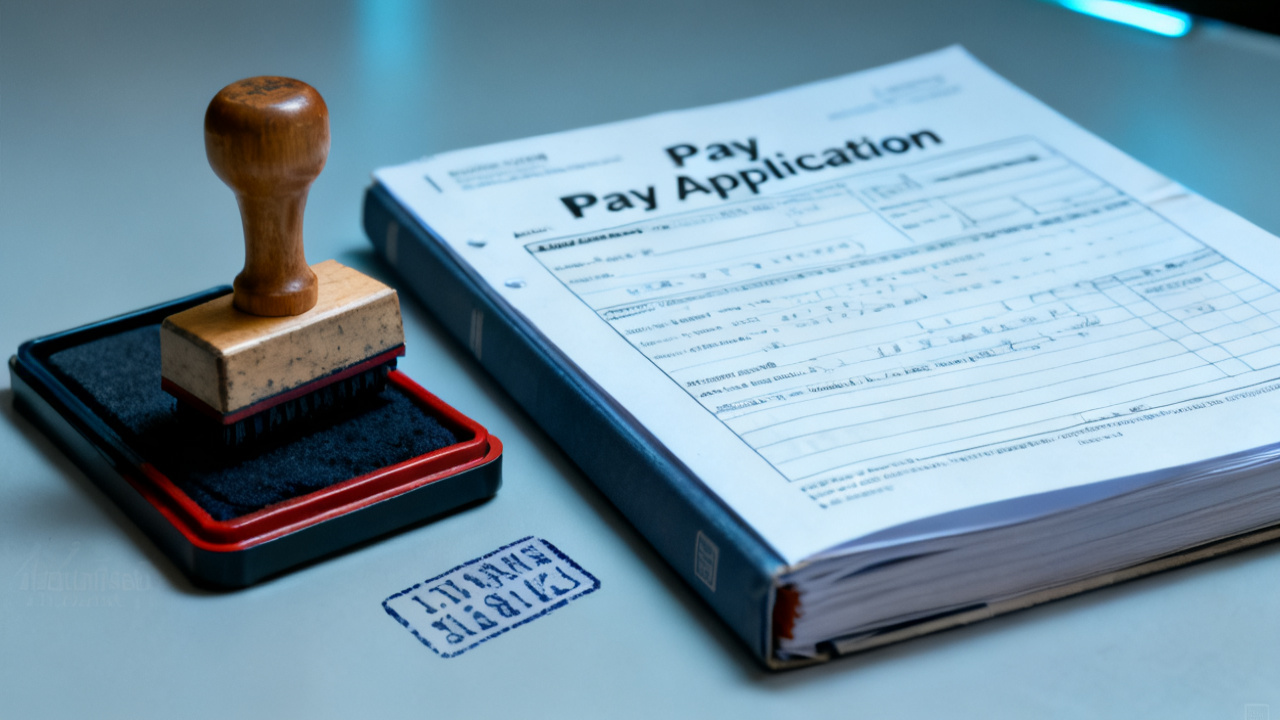
The signature line was signed. That person is not on the contract. You stare at the pay application you pulled ten minutes ago, coffee gone lukewarm at your elbow, the mismatched name jumping out at you harder than any redline you’ve seen all month. The document sat in your unprocessed stack for two days while you wrapped up a backlog of inspection follow-ups, and you almost missed the discrepancy entirely when you first flipped to the signature page.
What the paper says
The signature block lists the required role of “authorized site representative” next to the scrawled name you don’t recognize from the pre-construction agreement. You cross-reference the typed name printed under the signature with the list of named parties on the first page of the executed contract, and no match comes up. The signature is dated the same day the pay application was submitted, with no addendum or change order attached to note a shift in authorized signatories for pay-related requests. All other line items on the document align with what you expected for this draw period: completed work quantities line up with weekly inspection notes, material receipts are attached and match the listed supply costs, the requested draw amount aligns with the scheduled pay milestones outlined in the original scope of work. No other sections of the document have errors, no line items are out of scope, no calculation mistakes throw off the total requested amount.
What you leave alone
You do not cross out the signature, write notes on the original document, or mark the name as incorrect directly on the page. Altering the original document creates unnecessary ambiguity if you need to reference it later for reconciliation or review, so you keep the original copy entirely pristine as you work through your verification steps. You do not flag the discrepancy to the project owner before you run through your standard verification steps, because premature flags can create unnecessary friction between all parties on the site and slow down processing for work that is already verified as complete. You also do not file the document in your official pay record folder yet, because you have not confirmed its validity to add to your permanent project files. You hold off on sending any formal rejection notices, because you have not yet gathered context for why the signature does not match the listed authorized parties.
The ten-minute check
You run through a short, structured verification process to resolve the discrepancy before you move forward with processing the pay request:
- Pull the fully executed original contract for the project scope tied to this pay document, and cross-reference the full list of authorized signatories for all pay-related requests, including full legal names and official job titles.
- Pull all approved change orders submitted for the project to date, and check for any formal updates to the list of authorized signatories that may have been filed during the course of work, even for changes unrelated to pay process adjustments.
- Reach out directly to the primary contract holder listed on the agreement, to ask if the signature belongs to a recently added team member who has been granted formal sign-off authority for pay draws.
- Request a signed, one-page authorization letter from the primary contract holder if the signatory is a newly authorized team member, to add to the supporting documents for this pay request.
- Cross-reference the signature on the original pay document with the signature on the authorization letter, if one is provided, to confirm a match before you move forward with routing the request for further processing.
Illustrative example: the current pay request totals $147,289 for concrete placement and formwork completed between the 1st and 22nd of the month, so you prioritize this check to avoid delaying processing for work that is already verified as complete by third-party site inspectors. The process takes less time than you expect, because you keep all contract and change order documents organized by project in your desk drawer, so you do not have to hunt for any required records during the check.
Where the page goes
If you receive confirmation of the signatory’s authority and the required supporting authorization letter, you file the original signed document alongside the authorization letter, inspection logs, material receipts, and the pay calculation sheet for this draw period. You can file it alongside supporting lien waivers and inspection logs in Draw Jacket for easy cross-reference later. You also save a high-resolution scan of both the pay document and the authorization letter to your cloud project folder, so you can pull it up quickly from any site device if you need to reference it during a walkthrough or check-in. If you do not get confirmation of the signatory’s authority within three business days, you place the document in a dedicated pending action folder on your desk, with a single sticky note on the outside of the folder noting the date you reached out to the contract holder for clarification, no notes written directly on the document itself. You leave the folder in the top stack of your inbox tray, so you remember to follow up with the contract holder every 48 hours until you receive a response.
What you do not assume
You do not assume the signature is fraudulent, the request is invalid outright, or the contract holder knows the wrong person signed the document. Most of the time, the misaligned signature comes from a simple oversight: a new foreman was asked to sign off on the draw because the authorized project manager was out sick for the week, or the contract holder added a new team lead and forgot to send over the updated authorization paperwork before the draw was submitted. You do not assume the work listed on the pay request is uncompleted just because the signature does not match, because you already cross-referenced work quantities with your weekly site inspection notes before you spotted the signature discrepancy. You also do not assume the project owner will reject the request out of hand, as long as you provide the supporting authorization letter to confirm the signatory has the authority to approve the work completed. You avoid jumping to conclusions about intentional wrongdoing, because most signature mismatches on pay documents are honest mistakes that take only a few minutes to resolve with a quick check-in.
The next time you open this same page
When you pull this document up again, whether it’s next week to add the authorization letter or three months from now during a quarterly pay reconciliation, you immediately cross-reference the attached authorization paperwork first to confirm the signature’s validity before you review any other line items. You use the document as a reference to update your master list of authorized signatories for the project, so you can catch similar discrepancies faster for future draw requests. You can pull up the digital copy if a question comes up about who approved the work for that pay period, and point to the attached authorization letter as formal confirmation of the signatory’s authority. You also make a quick note to yourself to cross-check all signature blocks against your updated authorized signatory list first for all future pay documents, to cut down on verification time later. If you pull the page up during a project closeout review, you use it as a reminder to include a line item in your pre-draw checklists for all upcoming projects, to confirm that all signatories on pay requests match the authorized list before you start processing any line items. This small adjustment to your routine cuts down on time spent resolving mismatched signatures for future draws, and keeps your pay processing timeline on track for every phase of work.