Educational overview only. Prudent Guardian (www.inspirecodingedu.com) is not an insurance company, broker, law firm, or registered investment adviser, and does not provide personalized insurance, investment, tax, medical, or legal advice. Verify details with licensed professionals and official issuers.
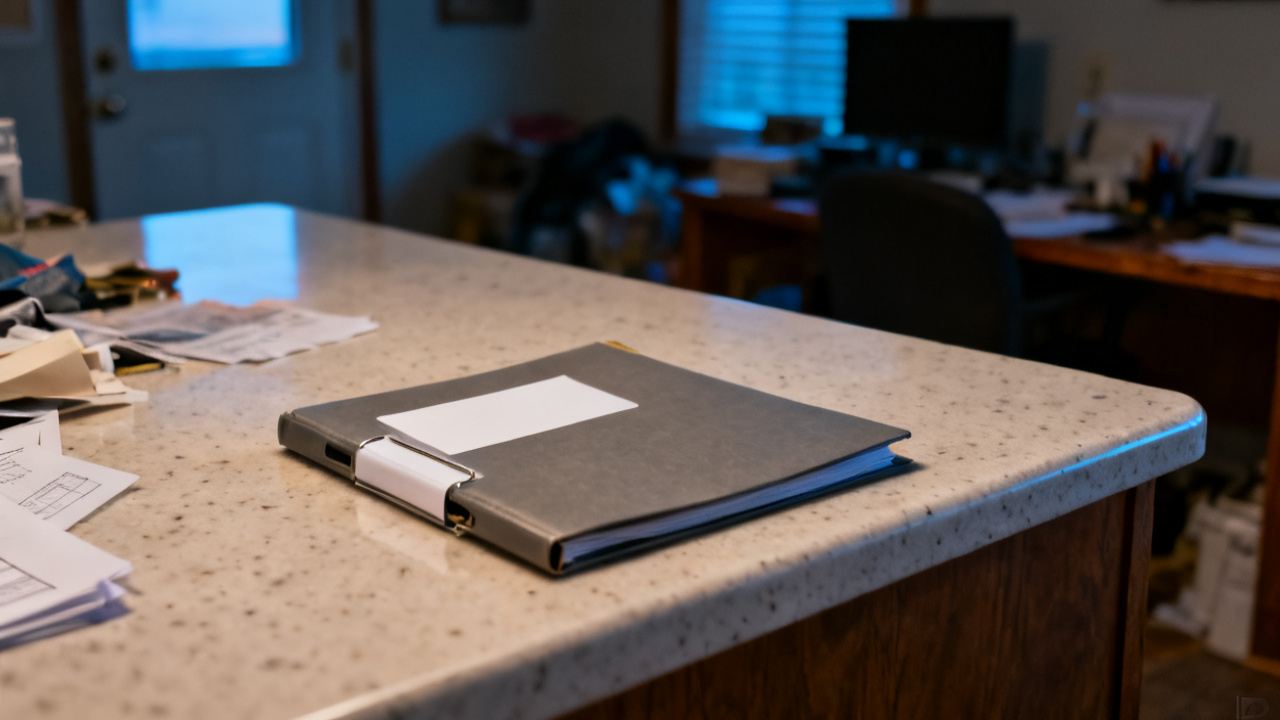
A proposal has a rejected note. It is still in the jacket. You flip it over once, scanning the faded scribble in the top right corner where the project manager scrawled their decline three weeks prior. The edges are crinkled from being stuffed between a change order request and a material delivery receipt you haven’t filed yet. No one has touched it since you slid it into the stack after the last site walkthrough.
What the paper says
You run your finger down the printed lines to confirm all original content is intact, no pages missing or smudged beyond recognition. The document is your submission for the concrete foundation repair scope you sent in mid-month, listing 120 linear feet of epoxy crack injection, 4 rebar reinforcements for the load-bearing west wall, labor for a 3-person crew over 2 consecutive workdays, bulk material costs, and a standard mobilization fee. It also includes a line item for post-repair pressure testing to confirm the foundation meets local commercial building code requirements, plus three attached references from past foundation repair jobs you completed for similar mixed-use builds. The only handwritten mark on the front page is the rejection note, which reads, “Scope overlap with current masonry contract, no budget allocated for add-on right now.” The project ID printed in the top left corner matches the downtown mixed-use build you’ve supported for the last six months, so you rule out any mix-up with the smaller residential repurpose job across town.

Elements you leave alone
You make no edits to the original document, no matter how tempted you are to adjust details that feel outdated or incorrect now. You don’t cross out the rejected note to make space for a revised approval signature later, don’t scribble updated material cost numbers in the margins, and don’t tape a revised scope slip to the front cover. You don’t rip off the reference list page to reuse it for an upcoming proposal for a different client, and you don’t cross out the mobilization fee line even if you think waiving that fee could make the scope more appealing if the client revisits it later. Any edits you make now would erode the document’s value as an official paper trail of what you offered, when you offered it, and the exact response you received. The only mark you add is a small, unobtrusive date stamp in the bottom right corner to mark today’s date, with no additional notes or commentary.
The ten-minute check
You run through this quick, structured check before you file the document away, no detours, no extra research, no tangential phone calls to clarify the rejection reason right now. The full process takes no more than 10 minutes, as you have three other pending proposal submissions due before the end of the day that need your attention. The steps are:
- Confirm all pages of the original proposal are attached, including the two scope addenda that list the specific ASTM material standards you planned to use for the crack injection work, no pages missing or swapped out with unrelated paperwork.
- Verify the rejected note is initialed by the authorized client project manager who handles all scope approvals for the job, not a junior admin or subcontractor lead who does not have formal sign-off authority.
- Cross-reference the proposal number in your digital submission log to confirm you have a timestamped PDF copy of the exact same document saved to your encrypted cloud project folder, with no edits made after the official submission date.
- Note the exact reason for rejection listed on the note, and add a 1-sentence entry to your project activity log that matches that reason verbatim, no extra interpretation or editorializing about the accuracy of the scope overlap claim.
- Check for any attached sticky notes or follow-up requests that may have been added to the document after you received it, and flag those separately if they exist (today, there are no additional notes attached).
Illustrative example: If the proposal listed a total cost of $14,280 for the full scope, you confirm that number matches exactly across the physical copy, the digital PDF, and your submission log, no discrepancies of even a single dollar.
Where the page goes
The document does not go in the trash, does not get stuffed in a random stack of unprocessed paperwork on the corner of your desk, and does not get passed off to a teammate who does not handle official project documentation. You slide it into the dedicated “Submitted Proposals” section of your project binder, behind the accepted proposals for the same job, filed in chronological order by submission date. You place it directly after the pre-construction walkthrough checklist you completed the week before you submitted the proposal, so you can easily cross-reference scope notes if you need to pull the document later. You add a small, color-coded sticker to the edge of the page to mark it as rejected, so you don’t have to flip through every page to sort accepted vs declined submissions during future file reviews. If you use Draw Jacket to organize your site paperwork, you tuck it into the appropriate tabbed pocket for that project, right next to the rejected change order requests you filed earlier that month. You don’t file it with paid invoices or executed contracts, because it does not represent work that’s been approved or completed, so keeping it in the dedicated proposal section avoids confusion during future audits or closeout reviews.
Assumptions you set aside
You actively push back on unhelpful assumptions that pop into your head as you handle the document, so you don’t waste time on unproductive speculation. You don’t assume that a rejected proposal means you’ll never get to do that work for the client: the masonry contract may hit unexpected delays, the structural engineer may issue a revised report that requires the exact concrete repair work you proposed, or the client may free up contingency budget for add-on scopes halfway through the build. You don’t assume the rejection is a reflection of the quality of your proposal or your team’s work; the note explicitly cites budget and scope overlap, not pricing disputes or complaints about your past performance on the job. You don’t assume you can reuse the exact same proposal if the client reaches out later for the same scope; material costs may shift, labor availability may change, project timelines may be adjusted, so you’ll always draft a fresh proposal tied to the current project conditions if you get a follow-up request. You also don’t assume other stakeholders on the project know the proposal was rejected; you don’t mention the decline to the subcontractors you had lined up for the work unless you get confirmation the scope is permanently off the table, to avoid confusion or unneeded disappointment.
Next time you open this page
You pull this page out again only when one of two specific scenarios unfolds, no earlier. The first scenario is if the client reaches out directly to ask about reviving the concrete repair scope. If that happens, you use the original proposal as a baseline to draft a new updated offer, referencing the original submission date and rejection reason to avoid any confusion about prior conversations. You compare the original scope and pricing to current market rates, adjust as needed, and make sure any new proposal explicitly notes it replaces the earlier rejected version for full clarity. The second scenario is when you’re completing end-of-project closeout paperwork to reconcile all submitted scopes against the final executed contract. If you pull it during closeout, you attach a copy to the final project documentation package, noting that it was submitted and rejected for budget and scope overlap reasons, to create a full paper trail of all proposed work for the client’s records. You cross-reference it with the final project budget to confirm no funds were allocated for this scope, so you can mark it as fully closed out with no pending follow-up required. You don’t pull it out in between those two points to re-read the rejection, second-guess your pricing, or complain to teammates about the client’s decision; it stays filed away until it serves an active, productive purpose for the project. Once the project is fully closed out and all record-holding requirements are met, you shred the physical copy along with the rest of the non-critical project paperwork, no extra hoops required.