Educational overview only. Prudent Guardian (www.inspirecodingedu.com) is not an insurance company, broker, law firm, or registered investment adviser, and does not provide personalized insurance, investment, tax, medical, or legal advice. Verify details with licensed professionals and official issuers.
The order is a lump sum. A backup sheet is clipped behind it. You tug the edge of the sheet free to lay it flat next to the approved change order on your desk, pen hovering over the signature line for your pay app submission. The hum of your desk fan fades as you focus on the line items scrawled across the pre-printed grid, no messy scribbles in the margins yet. You set the change order face down for a moment to prioritize reviewing the backup before you move forward with your submission.
Listed details on the cost backup
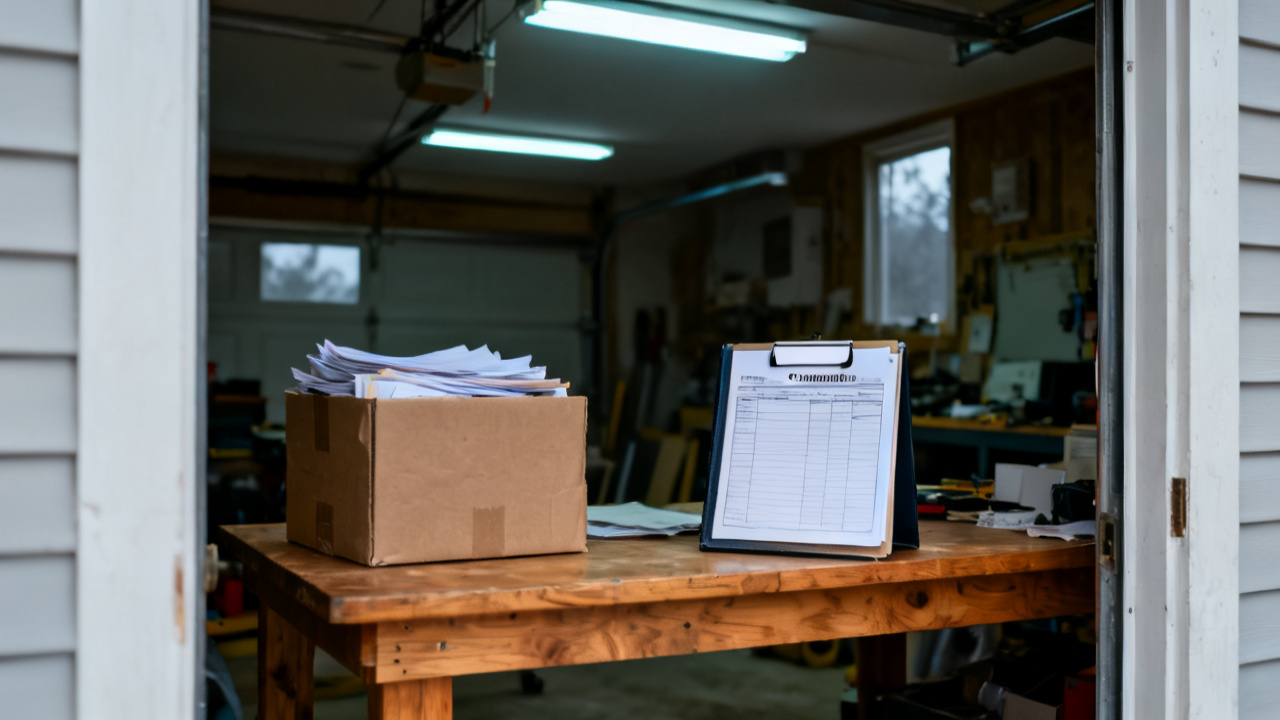
This sheet breaks down every component of the lump sum total, with no vague line items that fail to tie to specific work performed. Illustrative example: the lump sum total listed on the face of the change order is $12,400 for rerouting the second-floor mechanical ductwork to accommodate the updated ceiling height request submitted by the tenant improvement team. The backup lists 32 hours of licensed HVAC labor at the rate spelled out in your contract, $3,200 in sheet metal and fastening materials, $800 for a one-day scissor lift rental, and a 10% overhead allocation as outlined in your original agreement terms. It includes a signature from the foreman who tracked the work as it happened, no post-hoc estimates filled in weeks after the task wrapped. Dated photos of the ductwork before and after rerouting are taped to the back of the sheet, with timestamps that line up directly with the daily field logs you submitted last month. Each line falls inside the explicit scope of the signed change request, with no stray entries for work that was already included in the original contract sum.

Unmodified entries you keep as-is
You do not adjust the handwritten labor hour counts that match the foreman’s daily time entries, even if you think you could have completed the work in fewer hours with a different crew allocation. You leave the 7% rush delivery upcharge on the material cost line untouched, because the signed delivery receipt taped to the bottom of the sheet confirms the fee was charged by the supplier to hit the project’s tight timeline. You keep the 10% overhead allocation in place, as it is explicitly permitted in your contract’s change order terms, even if you worry the general contractor’s review team may question it. You never cross out existing lines, adjust numbers to make the total look more palatable, or add notes that contradict the foreman’s on-site observations. Any required adjustments get added as a separate, clearly labeled addendum if needed, never written over the original entries on the backup sheet.
Ten-minute review you complete now
This short, structured check ensures you catch obvious errors before the sheet leaves your desk, and it follows these 5 steps:
- Cross-reference each line item total against the supporting receipts, time logs, and delivery slips taped to the back of the sheet to confirm no math errors shift the total more than 1% in either direction. For the $12,400 example, this check catches a $120 addition error in the material cost line that would have made the backup total $12,520, so you flag it for the foreman to correct before you move forward.
- Verify that every line item on the backup falls explicitly within the scope of the signed change order, with no line items for work that was part of your original base contract scope.
- Confirm that the timestamps on all supporting documentation line up with the dates the change order work was performed, per the shared project schedule you access through your team’s project management platform.
- Match the final corrected total on the backup sheet to the lump sum listed on the face of the approved change order to ensure no discrepancies exist between the two documents.
- Add your dated initials to the bottom corner of the backup sheet to confirm you completed this check before filing the document.
This entire process takes less than 10 minutes, and it eliminates most common questions that come up during pay app review. You avoid rushing through the steps, even if you have a stack of other pay app materials to get through before the end of the day.
Designated storage spots for the sheet
Once you complete your review, you clip the corrected backup sheet back to the signed change order, then add both to the pay app packet you’re submitting for this month’s draw. You scan a high-resolution copy to your cloud project folder, filed under the unique change order number, so you can pull it up instantly if any questions come up during the pay app review process. If you use Draw Jacket for your draw submission tracking, you upload the scanned copy to the corresponding change order entry when you submit the rest of your pay app materials. You also keep a physical copy in your on-site project binder, in the tab for approved change orders, so you can reference it during field walks if the general contractor or owner’s representative asks questions about the scope of the lump sum work while you’re on site. You never store the only copy in your desk drawer, because you need access to it across multiple locations as the project moves forward. You also share a copy with your office admin for their records, so they can pull it up if you are out on site when a question comes in.
Incorrect assumptions to avoid
You do not assume that the general contractor’s pay app reviewer will connect the backup line items to the change order scope without you labeling each page of the backup with the corresponding change order number at the top. You do not assume that a verbal approval from the project manager for the lump sum replaces the signed backup documentation, even if you’ve worked with that PM for years and they have a track record of approving your requests without extra paperwork. You do not assume that small, unlisted costs like gas to pick up the rush materials are included in the lump sum, so you do not add those to the backup after the fact to recoup the extra cost. You do not assume that the backup will be retained by the general contractor’s office after the pay app is processed, so you keep your own copies for the full duration of the project and the post-completion warranty period. You also do not assume that the backup will be accepted without question, so you keep all supporting documentation organized and accessible for follow-up requests.
Next time you access this page
The next time you pull up this exact sheet is three weeks later, when you get an email from the general contractor’s accounting team asking for clarification on the scissor lift rental line item listed on the backup. You pull the physical copy from your on-site project binder, and you pull the scanned copy from your cloud folder, to cross-reference the signed rental receipt taped to the back of the sheet with the question the accounting team sent. You note that the rental period listed on the receipt lines up exactly with the dates the lift was used for the ductwork reroute, so you draft a short reply with a copy of the receipt attached, no extra explanation needed. You add a small, dated note to the margin of your physical copy noting the date of the inquiry and the resolution, so you have a clear record of the question if it comes up again later in the project. If the accounting team approves the line item without further questions, you return the sheet to its place in your binder, and you update the change order entry in your project tracking system to note that the cost backup has been reviewed and accepted as part of this month’s pay app. You leave the sheet in its designated spot until the next time a question arises, or until you archive all project documents after closeout.